One local index of your code
Symbols, imports, calls, inheritance, routes and HTTP calls from 23 languages, kept in SQLite under .mapx/. Nothing leaves your machine.
Getting started →Scan your codebase once, then query symbols, dependencies, impact and architecture rules without re-reading files.

Symbols, imports, calls, inheritance, routes and HTTP calls from 23 languages, kept in SQLite under .mapx/. Nothing leaves your machine.
Getting started →Agents ask for signatures, callers, dependencies and blast radius through 39 MCP tools, which costs far fewer tokens than reading the files.
MCP integration →A pool of parse workers indexes large repositories, and mapx sync re-parses only what git or the content hashes say changed.
CLI reference →Declare layers in .mapx/architecture.jsonc and mapx check fails the build on a forbidden dependency, with SARIF, GitHub, GitLab and JUnit reports.
Architecture rules →The dashboard that mapx ui serves from your own machine.
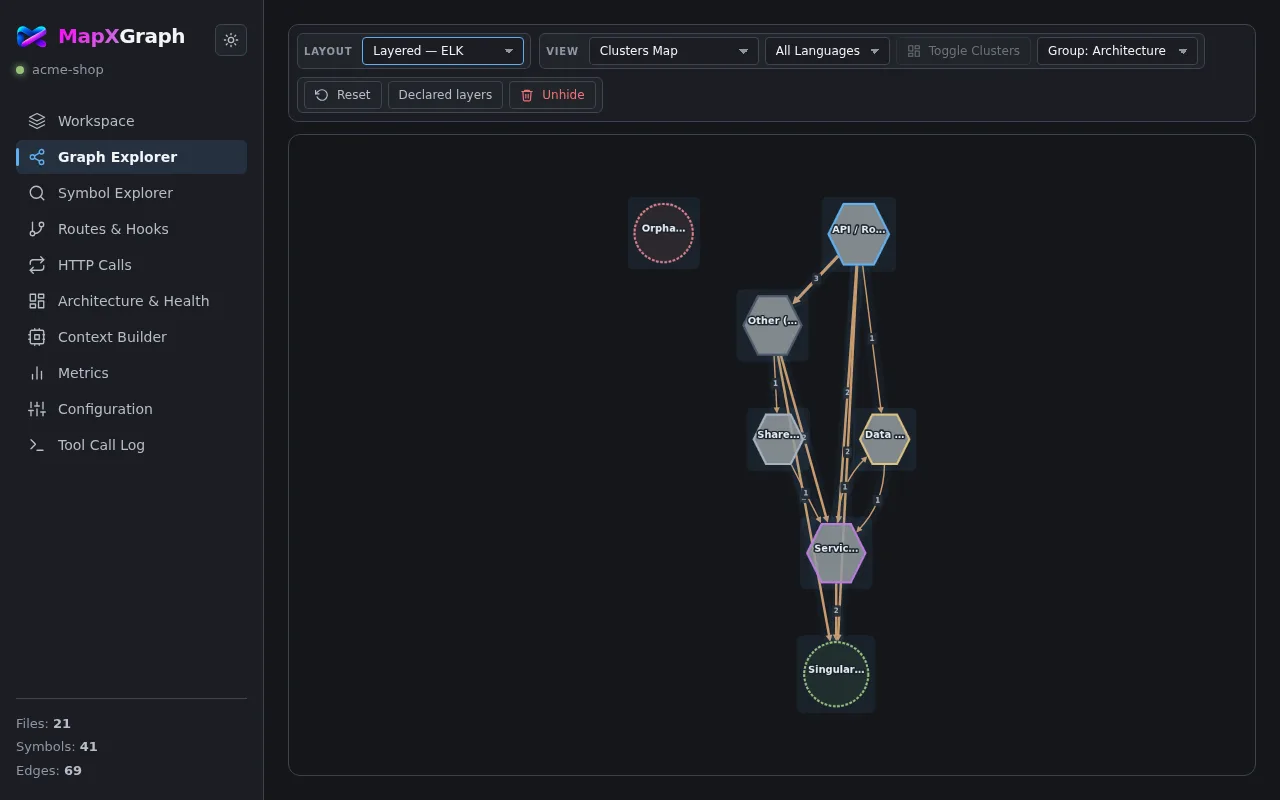
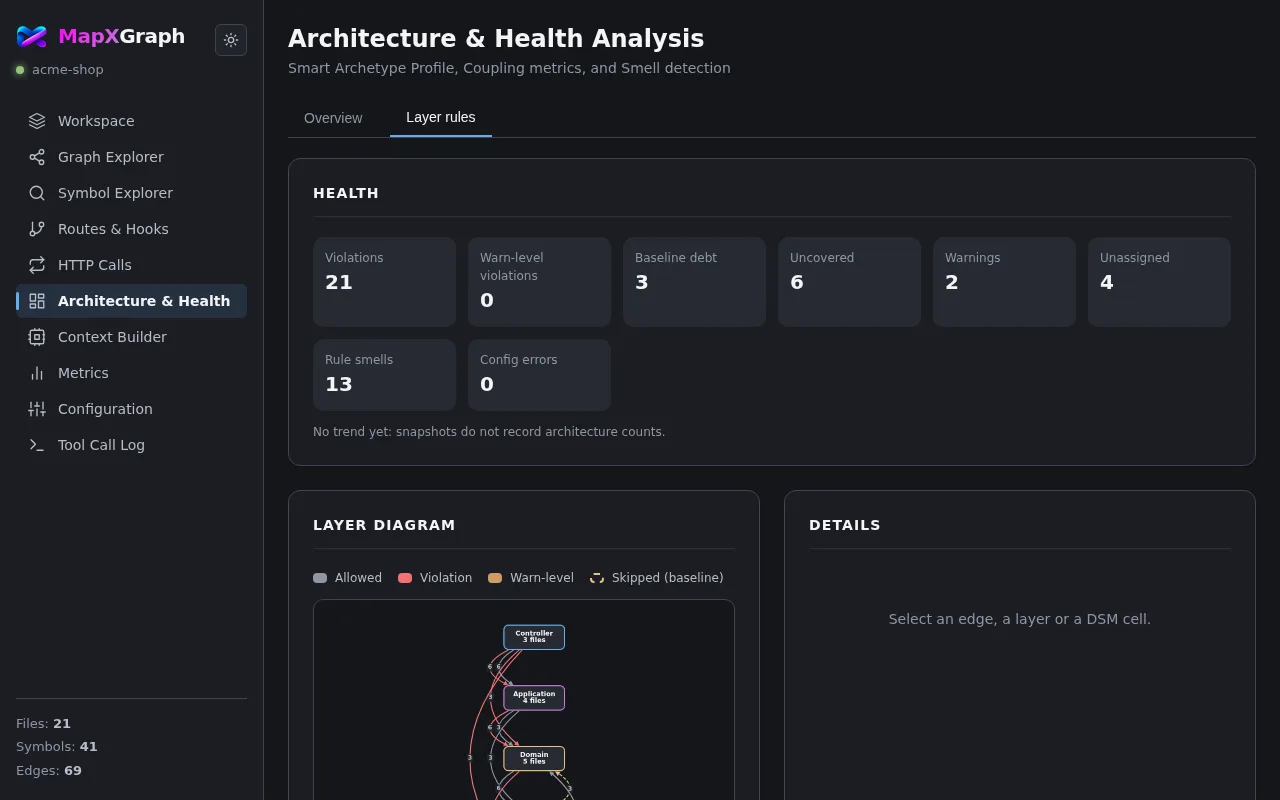
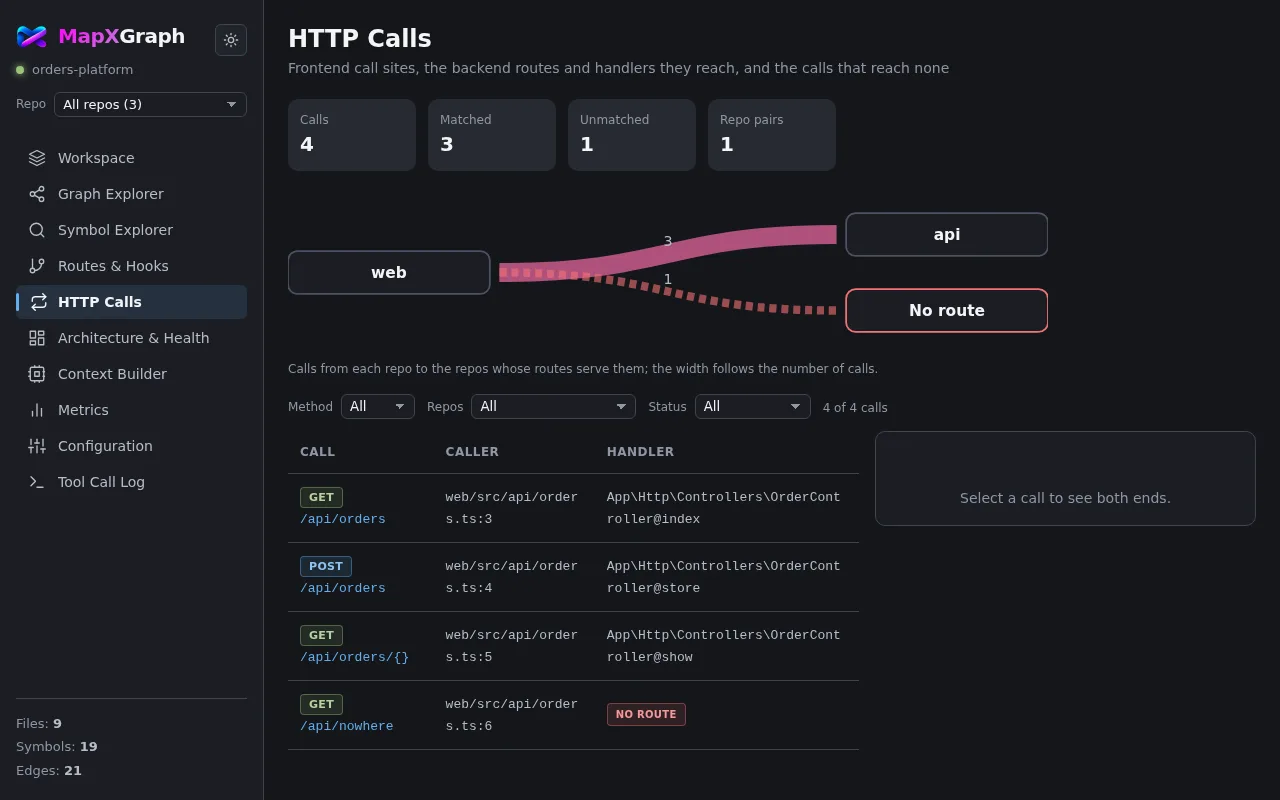
Install once, then index any repository and ask the graph.
npm install -g @mgamil/mapxnpx @mgamil/mapx initmapx init
mapx scan
mapx export # token-efficient summary to paste into an LLM
mapx query UserService # find a symbol
mapx callers findUser # who calls a function
mapx impact UserService # blast radius before a change
mapx arch init --write --baseline
mapx check
mapx syncUserService and findUser are symbols of the README's sample project: use a name from your own code.
{
  "mcpServers": {
    "mapx": {
      "command": "mapx",
      "args": ["serve", "--dir", "/path/to/your/project"]
    }
  }
}mapx init writes the instructions and MCP configuration for the tools it finds.